Posted on Leave a comment

Before Salem, Manningtree Went Insane

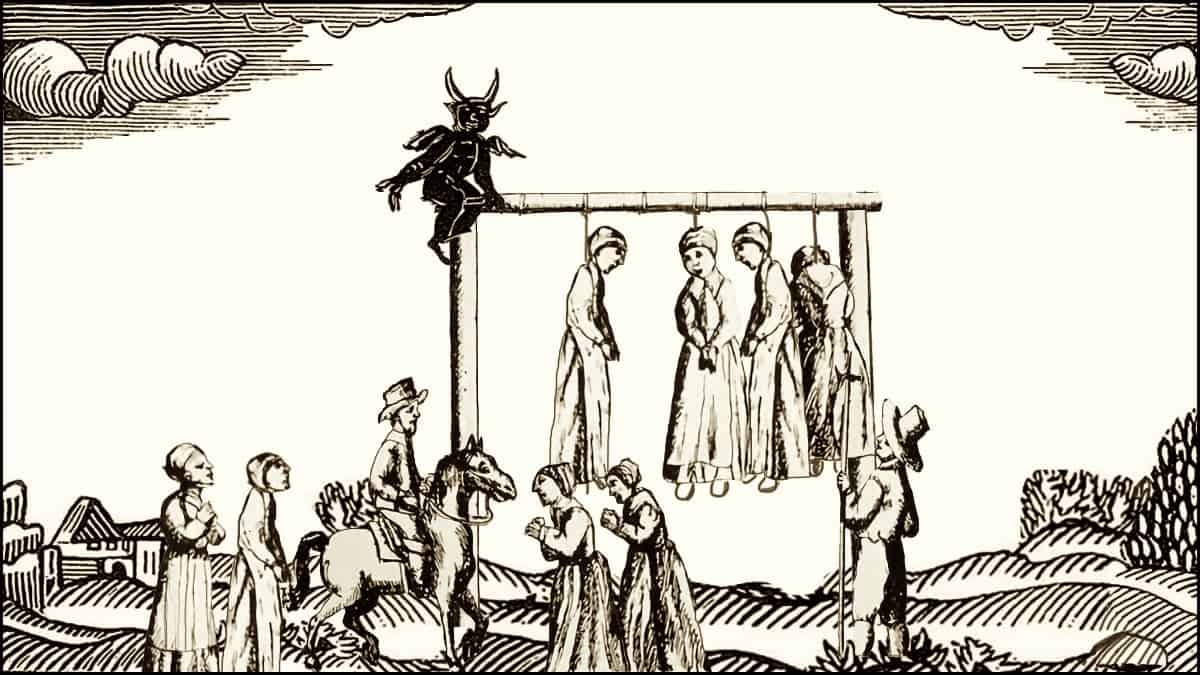
Photo of Witch Burning Efigy

In 1644, the tiny English countryside town of Manningtree in Essex was rocked by a horror that would culminate a half a century later – and half a world away – in the now-infamous Witch Trials of Salem, Massachusetts. At its core was a sustained campaign of “witch findings” and executions, instigated by local resident Matthew Hopkins. It was a campaign sanctioned by both English law and the teachings of the Church; one so cruel and arbitrary that it reverberates even to the present day. By the end of its two-year murderous spree, 300 women across Eastern England were dead.

A Pogrom against Paganism

Contents

For centuries, the people of the British Isles practiced Paganism, a Nature-based spirituality that was bolstered by the influx of the Celts and promulgated through local belief and folklore until the changing religions of the Roman Empire sought to extinguish it.

From the reign of Emperor Constantine onward, the Roman rulers of Britain first promoted then insisted upon subservience to its own God. It was a Theocracy based on Old Testament laws and teachings that vilified Pagan rituals, collectively termed “witchcraft”. Indeed, the word pagan is itself derived from Latin pāgānus, a pejorative used by the Romans to mean ‘non-Christian’.

The Celtic triskelion, one of many sigils found throughout Pagan Britain.

By the Late Middle Ages, witchcraft in Europe had become synonymous with the Christian concept of Satanism. (This, despite the fact that the Pagan worship of Nature had no roots in Satanism nor even acknowledged the existence of “The Devil”). Witch-hunters were now trolling across Europe, looking to carry out “God’s work” against individuals – mostly women – by accusing them of devil worship. The punishment for these often tenuous accusations was to be burnt alive or, in more ‘merciful’ cases, death by hanging.

In Elizabethan England, things were somewhat more subdued thanks to a strained tolerance towards certain ‘paganistic’ practices such as alchemy, astrology, and divination. Officially, witchcraft in England was indeed punishable by death, but only where harm had been caused; lesser offenses were punishable by a term of imprisonment.

That tolerance was lost when King James I, a staunch Catholic and vehement critic of the Occult, ascended the English throne in 1603. Within a year, he had sponsored yet another in a succession of British laws aimed at suppressing perceived anti-Christian acts. The Witchcraft Statute of 1604 ruled that “witchcraft” was a crime punishable by death. More significantly, it prescribed that guilt in such cases was no longer to be decided by the ecclesiastical courts but by the courts of the common law. While this change in jurisdiction afforded the accused some semblance of a trial before punishment, the burden of proof was lower. Witnesses could be called against the accused where the only evidence was hearsay.

Fatefully, it was this 1604 statue, An Act against Conjuration, Witchcraft and dealing with evil and wicked spirits, that provided the justification for a young man to begin a campaign of violence in the Eastern counties of England so ruthless that it still reverberates to this day.

Puritan Uprising

Manningtree is a tiny market town on the banks of the River Stour in the county of Essex. Like many ancient East Anglia towns, Manningtree had flourished during the wool and cloth trades of the 15th century. Cargo boats plied the wide river, transporting goods to the port of Harwich and beyond.

1793 map of Essex, England, showing the head of the River Stour Estuary.
Map of Essex, England showing Manningtree at the head of the River Stour Estuary.
Source: Carry’s English Atlas, 1793

By 1616, Manningtree was prosperous enough to build for itself a new church; one featuring a monument to Thomas Osmond, who had been martyred in the town a century earlier. Osmond was revered in this part of the country; a member of the Protestant Christian sect that had separated from the Church of Rome during the Reformation of the early 1500s. His legacy of heresy against church authority was to be carried yet further in the late 16th century with a new reform movement, Puritanism.

Puritans sought to reform themselves by purifying from their churches the last vestiges of Roman Catholic teaching and practice. It was a movement that gained popular strength in the early 1600s, especially in East Anglia.

The Puritan belief system espoused a strict way of living, with little to no tolerance for individuality. Church attendance in Puritan communities was mandatory. Puritans were also required to prove their actions were worthy of a select ‘inner circle’ that was guaranteed admission to Heaven.

As was true for many Christian sects of the time, Satan was as equally present in the Puritanical world as was their judgemental God. Sinning without repentance was considered the devil’s will. Those who were unrepentant were branded “witches and “devil worshipers”.

It was against this religious backdrop that Matthew Hopkins moved to Manningtree in the early 1640s.

The “Witch-finder General”

Matthew Hopkins was born around 1620 in Wenham, Suffolk, about 10 miles north-west of Manningtree. Hopkins’ father, uncle, and brother were all Puritan ministers. Matthew Hopkins was reputed to have trained as a lawyer, although there is scant evidence of this. Whatever his educational background, he was clearly well aware of the Witchcraft Statute of 1604.

Contemporary woodcut depicting Matthew Hopkins with witches and their familiars (“imps”), published 1647.

In March 1644, Hopkins learned from his soon-to-be assistant, John Sterne, that there was rumour of witchery in Manningtree and took it upon himself to investigate.

As he wrote in his book, The Discovery of Witches, published in 1647, Hopkins reported to the Judges of the Assize Court that a cabal of “witches” met regularly close to his house making sacrifices to the Devil (although he does not specify what this entailed). He reported that he had overheard one of the women instruct her “imp” – a demon in animal form – to fetch another witch. This woman, he said, was then seized, stripped naked and searched for marks of the Devil.

Her name was Elizabeth Clarke, and was Matthew Hopkins’ first victim.

Elizabeth Clarke was a poor, aging woman with a missing leg whose own mother had been hanged as a witch, years before. Hopkins reported to a local magistrate that the strip search of Clarke had revealed “three teats about her, which honest women have not”. On this ‘evidence’ she was thrown into prison on suspicion of witchcraft.

Clearly, physical abnormalities were still only tentative evidence of witchcraft at the time, because what Hopkins did next was to set the tone for the persecution and murder of hundreds of women over much of the Western world. Hopkins devised a method of interrogation (“witch-finding”) that was designed to extract confessions of devil-worship from his hapless victims. He termed it “watching”. It was a specific process of coercion for a confession rather than medieval-style torture, which was not admissible as evidence.

Watching” played a waiting game toward the prize of a confession, one that would stand up in court. Victims were locked in a room with their violent captors where they were made to sit in a particular position on a stool. Over the next 24 hours (or longer) these women were starved, deprived of sleep, mentally harangued and verbally abused.

Hopkins’ new witch-finding method was successful. Elizabeth Clarke not only confessed but named five other women as witches:  Anne West, Rebecca West, Anne Leech, Helen Clarke, and Elizabeth Gooding.

Buoyed by his prowess at extracting confessions from starved, sleep-deprived, humiliated and abused women, Hopkins pressed the townsfolk to denounce yet more hapless human beings as witches. By the time of the trial at Chelmsford on the 29th of July 1645, Hopkins and his gang had gained confessions from dozens of women. Of those charged with witchcraft, 29 were condemned at trial. Ten women were hanged at Chelmsford, while four were taken back to Manningtree to suffer the same fate. The remaining victims were executed in various other villages and hamlets on the surrounding area.

Thanks to his success as a witch-finder, doing “God’s work” in the deeply pious counties of East Anglia, Matthew Hopkins gained tremendous notoriety. Emboldened by a profession long-supported by Church and State, and now charging extortionate fees, Hopkins anointed himself “Witch-finder General”, traveling all over Eastern England claiming to be officially commissioned by Parliament to uncover and prosecute witches.

A tyrant had been unleashed.

Salem Scourge

There is a direct link between the atrocities committed by Hopkins and those perpetrated decades later in the New England colonies.

Hopkins’ witch-hunting methods were outlined in his 1647 book The Discovery of Witches. Over the following year, the trials and executions for witchcraft began in Massachusetts, with particular note of the ‘hunting’ of Margaret Jones. As described in the 1649 journal of Governor John Winthrop, the man who condemned her, the evidence assembled against Margaret Jones was gathered by the use of Hopkins’ techniques of “searching” and “watching”.

A Fitting Finale?

That a man in his twenties could rouse an entire population to persecute and murder their neighbors, and even members of their own family, says much about the concerns and beliefs of the Early Modern Period of England. It should be understood that both the witch-finders and the magistrates that condemned these people to die were acting within societal norms. Church dogma had instilled in the population that a “vast conspiracy of Devil-worshipers infecting the Godly nation”1.

The big difference between the societal norms of 17th-century England and the notoriety of “Witch-finder General” Matthew Hopkins is the sheer scale of the horrors he enacted. Hopkins and his cohorts were responsible for the deaths of more “witches” within a two-year period than had been killed in the previous 100 years. Between 1644 and 1646, Hopkins is believed to have secured the convictions of around 300 women, leading directly to their execution. To put this in context, approximately 200 people were accused of practicing witchcraft in the Salem Witch Trials, and 20 were executed.

There is some commentary on whether Hopkins simply hated women. This is possible. But these were also deeply misogynistic times, and “the witch, after all, was the behavioral opposite of the stereotypical role model of the ‘good wife’”2. The Puritans, like many societies of the 1600s, also believed that women were culturally inferior to men.

It does not take too much imagination to presume that Hopkins, a man catapulted to popular notoriety and making good money from his deeds, simply took extreme advantage of these societal norms. It is also not too much of a stretch to conclude, given the universal applicability of his witch-finding methods, that he was nothing less than a psychopath with an inflated ego and cruel penchant for causing harm and suffering.

Matthew Hopkins died at his home in Manningtree, Essex, on 12 August 1647. He was still in his mid-twenties.

One could romanticize on whether Hopkins’ early death was the result of a hexing spell cast by one of his victims; a true, practicing witch. There is also a popular fiction that Hopkins met his end by being accused of witchcraft himself. Either would have been a fitting finale. Less dramatically, however, Hopkins died from tuberculosis, coughing up blood and unable to breathe, much like the final throws of his victims who died from hanging on the gallows.

May he rot in his personal Hell.

  1. Ref: Michal Wojcik (2013) Matthew Hopkins’ Advanced Interrogation Techniques“, One Last Sketch blog, 2013 []
  2. Ref: Louise Jackson (1995) Witches, wives and mothers: witchcraft persecution and women’s confessions in seventeenth-century England, Women’s History Review, 4:1, 63-84 []

Leave a Reply